Erosion Corrosion in Copper Pipes: Why Laguna Hills Homes See Leaks at Elbows and Hot Water Lines First
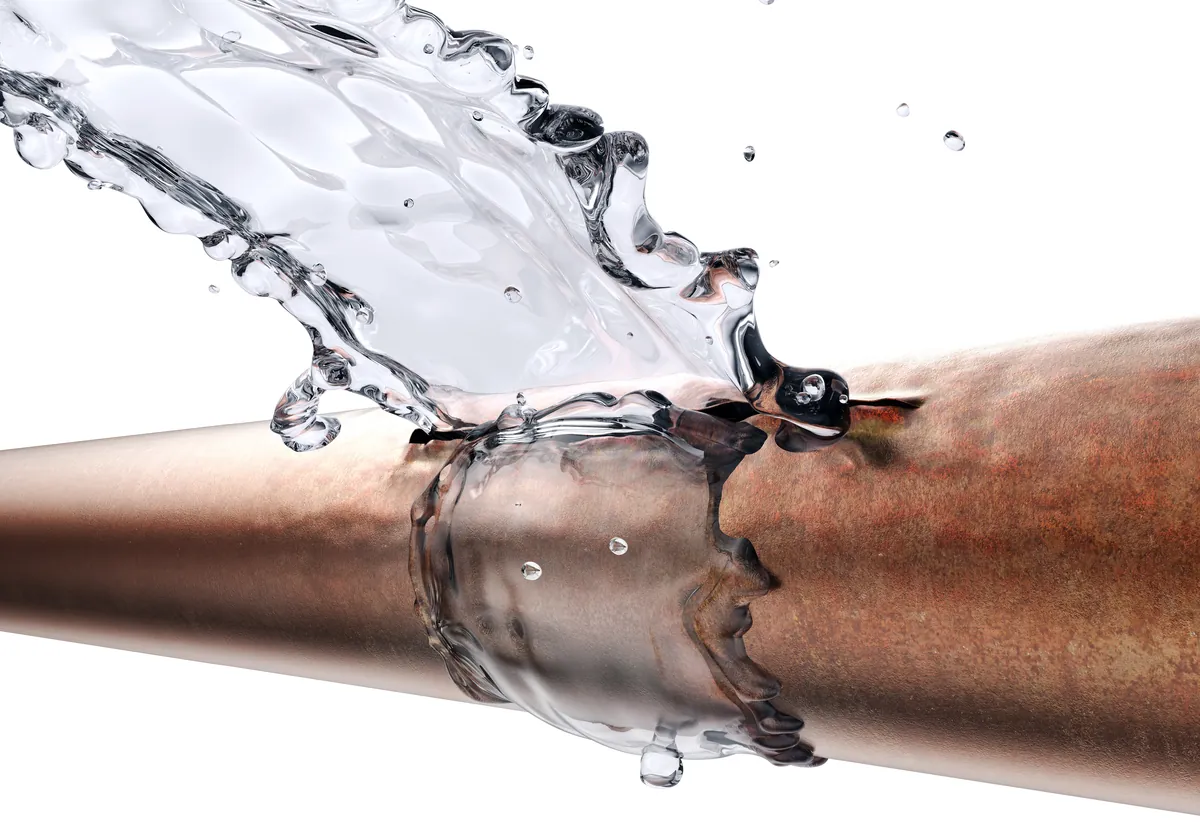
Not all copper corrosion is the green crust you can see. Erosion corrosion wears copper away from the inside where water moves too fast or turns too sharply. What…
Copper has a strong reputation, and much of the plumbing in Laguna Hills homes built in the 1960s and 1970s is copper. But copper can fail in several different ways. One of the most misunderstood is erosion corrosion, which thins the pipe from the inside, usually where water moves fast or changes direction. Understanding it helps explain why some homes get repeated leaks in the same kinds of places.
What erosion corrosion is
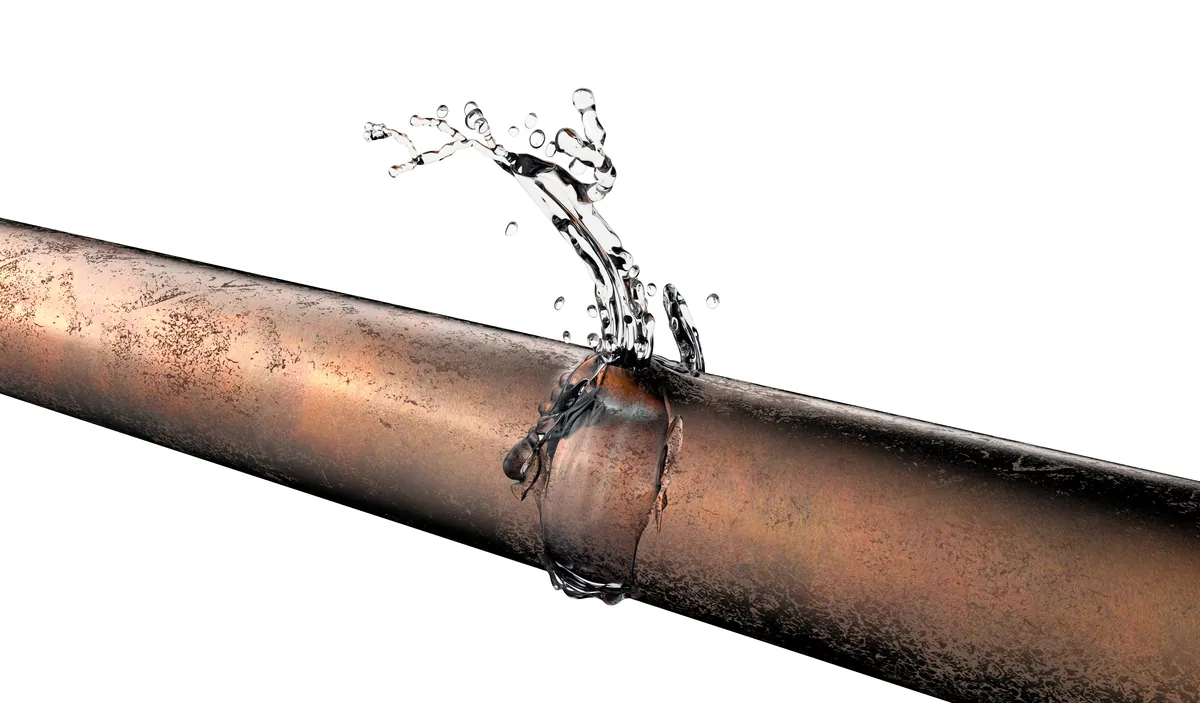
Copper normally forms a thin protective film on its inside surface. Erosion corrosion happens when moving water keeps scrubbing that film away before it can rebuild. The metal underneath wears thin in a pattern that often looks like smooth grooves or horseshoe-shaped pits when a pipe is cut open. Eventually a pinhole forms.
What makes it worse
- High velocity. Undersized pipes or high pressure push water faster than copper likes.
- Hot water. Hot water is more aggressive, which is why hot lines often fail first.
- Recirculation pumps. Pumps that run constantly, or that are oversized for the loop, keep water moving through the hot lines all day.
- Sharp turns and turbulence. Elbows, tees and spots right after a pump or valve take the brunt of the flow.
- Installation details. Pipe ends that were not reamed after cutting, or excess solder inside joints, create turbulence that starts the wear.
Where leaks tend to show up
Homeowners often notice a pattern: pinholes at or just past elbows, on the hot side, and near the recirculation pump or water heater. In Laguna Hills single-story ranch homes with slab foundations, that can mean leaks in walls near the heater closet or under the floor along the hot water loop. In two-story homes, upstairs hot lines in the attic are common trouble spots.
Erosion versus other copper problems
- Green crust on the outside usually points to external corrosion or slow seepage at joints.
- Pinholes randomly along straight runs can come from water chemistry or manufacturing issues.
- Pinholes clustered at fittings and on hot lines fit the erosion corrosion pattern.
The pattern matters because erosion damage is rarely limited to the one spot that leaked. If the conditions that caused it are still present, other fittings in the same loop may be thinning too.
What homeowners can do
Note where each leak happened and whether it was hot or cold. If you have a recirculation pump, check whether it runs on a timer or demand control instead of all day. Check static pressure with a gauge. A history of repeated hot-side leaks is a good reason to evaluate the hot water piping as a whole instead of patching one elbow at a time. Many Laguna Hills communities have HOA rules for work access and scheduling, so check those early.
Related reading
On this site, see a warm spot on the floor and HOA repipe approval. Neighbors can visit Aliso Viejo, Lake Forest and Laguna Niguel, or browse every city at repipeinc.com.
Second leak on the same hot line?
Request a free quote and tell us where the leaks have been. The pattern helps us understand your piping. Get my free quote. Our AI system alerts a technician instantly, so you get a fast callback.
Repipe OC, 23821 Hillhurst Drive, Laguna Niguel, CA 92677, (949) 524-2362, CSLB #1087885 C-36.
Repipe OC near you
Not in Laguna Hills? The same crew serves nearby cities. See the Repipe OC hub (repipeinc.com), or jump to a neighboring city:
 Written by Repipe OC · CSLB #1087885 C-36 · 23821 Hillhurst Drive, Laguna Niguel, CA 92677 · (949) 524-2362